POLI 111: Introduction to American Politics
Fall Semester 2024
Course Information
Meeting Time: Mondays and Wednesdays, 10:50am–12:05pm
Room: Hall of Letters 317
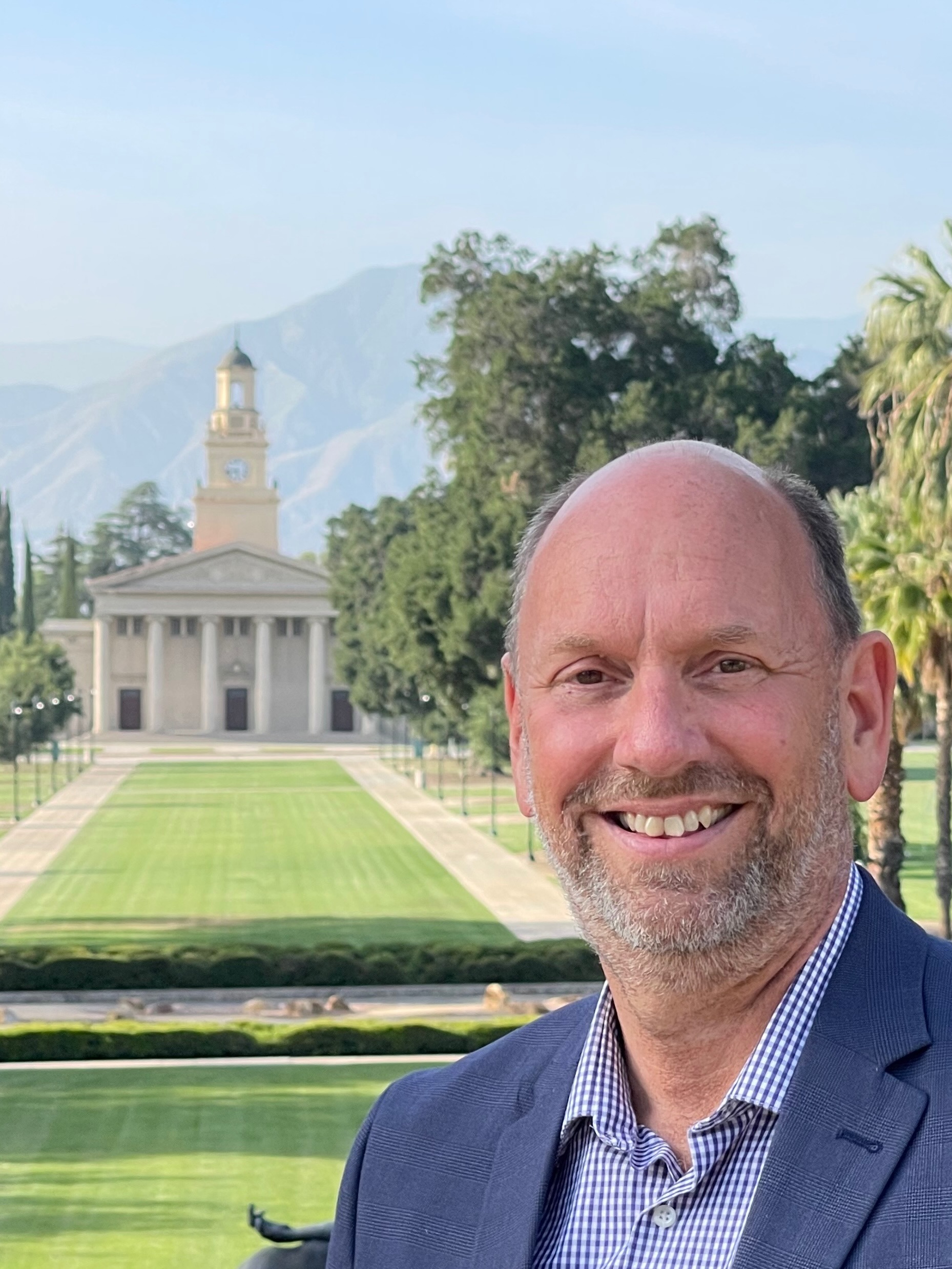
Instructor: Professor Greg Thorson
Office: Hall of Letters 306
Phone: (909) 748-8636
Email: Greg_Thorson@redlands.edu
Office Hours: Mondays and Wednesdays, 12:30pm–1:30pm (or by appointment)
Course/Faculty Page: bulldog2.redlands.edu/fac/Greg_Thorson/
Course Description
This course serves as an introduction to both the institutions (Congress, the Presidency, and the Judiciary) as well as the processes (elections, media, public opinion, etc.) of American government. Introductory courses such as this are often described as “survey” courses. We will survey a very wide range of topics classified under American politics, covering major political institutions as well as key processes operating within those institutions.
Because the course is broad, we will not cover most topics in great depth. For each topic, however, there exists a substantial scholarly literature that reveals important and often surprising insights. This course is intended to function as a menu that allows you to sample a range of subfields within American politics, and to help you identify areas you may want to explore in upper-division courses.
Why take a course in American politics? One powerful argument is that democracies depend upon a high number of engaged, politically astute people to be successful. Can a democracy function if people don’t understand or even follow politics? Only a quarter of young people will graduate from college in the United States. If the most educated young people in the country don’t understand or are not interested in politics, can the United States have a successful democracy?
See also: Course Links / Recommended Websites
News & Recommended Sources
Wall Street Journal + New York Times Access
- My preferred news source is The Wall Street Journal. Student subscriptions: store.wsj.com/shop/us/us/wsjstudentelect21/
- The University of Redlands provides complimentary access to The New York Times: nytimesineducation.com/access-nyt/
Professor Thorson’s Favorite Facebook “Likes” (examples)
- News: Wall Street Journal; AP; Reuters; New York Times; Washington Post; Los Angeles Times; PBS NewsHour
- Washington, DC: Roll Call; Politico
- Education: Education Week; EdSource
- Health Care: Kaiser Family Foundation; Health Affairs; The Commonwealth Fund; RWJF
- Think Tanks / Periodicals: Brookings; Mathematica; The Economist; Journal of Health Politics, Policy, and Law
Professor Thorson’s Favorite X (Twitter) Feeds to “Follow” (examples)
- National News: WSJ; AP; Reuters; NYT; LA Times; Washington Post (Post Politics); CNN Breaking News; NPR Politics
- State & Local News: Sacramento Bee; KPCC; Redlands Daily Facts; Capitol Alert; California Politics
- Washington, DC: Politico; Roll Call Politics
- Education: Education Week; Education Next
- Health Care: Kaiser Health News; RWJF News
- Think Tanks: Brookings; AEI; CATO Institute
The purpose of the news requirement is to build the habit of following politics closely and forming evidence-based opinions grounded in reputable sources.
Student Learning Outcomes
- Advance understanding of basic characteristics, institutions, and processes in the U.S. constitutional system.
- Advance understanding of how these characteristics and institutions have changed over time.
- Advance knowledge of classic readings in American government and politics (e.g., Federalist Papers; de Tocqueville; John Locke).
- Advance understanding and interest in current events as they occur in American government and politics.
- Encourage and model discussion of political activities in a manner that is both productive and respectful.
Textbooks
Required Texts
- Canon, David T., John J. Coleman, and Kenneth R. Mayer. 2023. The Enduring Debate: Classic and Contemporary Readings in American Politics (9th ed.). New York: W.W. Norton & Company.
- Edwards III, George C., Martin P. Wattenberg, and Martin G. Howell. 2022. Government in America: People, Politics, and Policy — 2022 Midterm Elections Update (18th ed.). New York: Pearson.
- Paul, Richard and Linda Elder. 2020. The Miniature Guide to Critical Thinking: Concepts and Tools (8th ed.). Tomales, CA: Foundation for Critical Thinking.
Books can be purchased from the campus bookstore and are widely available elsewhere. Students should have their books the first day of class.
Grades
Final grades for the course will be based on your performance in the following areas:
| Component | Weight |
|---|---|
| Daily Quizzes / Participation | 30% |
| Midterm Exam | 35% |
| Final Exam | 35% |
Course Grade Scale
| Course Percent | Grade |
|---|---|
| 93%–100% | 4.0 |
| 88%–93% | 3.7 |
| 83%–88% | 3.3 |
| 79%–83% | 3.0 |
| 75%–79% | 2.7 |
| 71%–75% | 2.3 |
| 67%–71% | 2.0 |
| 63%–67% | 1.7 |
| 60%–63% | 1.3 |
| 57%–60% | 1.0 |
| 54%–57% | 0.7 |
| Below 54% | 0.0 |
Daily Quizzes / Participation
Students will be graded on their timely presence in class as well as their participation in class discussion. Students are required to have read the assigned material before coming to class. Your participation grade will be based on your physical presence in class, the quantity and quality of your contributions to the class discussion, and the extent and quality of your preparation for class as measured by your participation in class and daily class quizzes.
Class attendance, as well as taking the quizzes, is required for completion of the course. We will take daily quizzes using
Poll Everywhere. Please download the free Poll Everywhere software for your phone or tablet. While you can take the quiz on
your computer from the Poll Everywhere website (Poll Everywhere),
students have experienced less glitches by using the various apps from their mobile devices. Please login to the app using your
@redlands.edu email address and choose PollEv.com/profthorson to join the presentation.
You will take daily quizzes that ask you about (a) the main points from the previous class discussion, and (b) the major points addressed in the new readings to be discussed in class that day. These quizzes will reward you for attending class, paying attention, and being prepared.
Please note that I will throw out your lowest two quizzes during the semester. Approved and unapproved absences will count toward your two dropped quizzes.
Exams
Both exams will be closed book and closed note. Each exam will be composed of predominantly essay questions. I will provide you with a review sheet for each exam to assist you in your preparation.
- Midterm: 75 minutes
- Final: 2 hours
Final Examination: The final exam will be held on Wednesday, December 11, from Noon–2pm (or as directed by the Dean’s Office). Please mark this date on your calendar ASAP. Do not plan to depart Redlands until your finals are completed.
Policies
Title IX Information
If you wish to speak to someone confidentially (meaning not filing with the Title IX Office), you can contact on-campus resources including Counseling Services, the Crisis Line, and the Chaplain’s Office. For more information, please visit www.redlands.edu/titleix.
Names and Personal Gender Pronouns
It is important to me that I learn both your preferred name and personal gender pronouns. If I state either incorrectly, please correct me either during or after class. I appreciate your help!
Technology in the Classroom Policy
While I don’t formally ban the use of laptops, tablets, and cell phones in class, I strongly encourage you to turn these devices off during class and use paper and pen/pencil for note-taking. There is strong evidence that this method of note-taking is far superior to that of note-taking on a screen.
Freedom of Expression
I am committed to the free expression of ideas in my classroom. Particular viewpoints should not be privileged simply because they are popular or supported by influential elites. All ideas and their corresponding assumptions must be defended by reason and evidence. It is my belief that free inquiry is a human right, should be a core value at all universities, and will be protected in my classroom even if doing so will come at great cost.
What does this mean for you? If you enroll in one of my classes, you may hear statements that you consider disagreeable, inappropriate, or offensive. All members of the class will be given very broad discretion to speak and write what they want. My classroom is not a “safe space”, nor is it designed to be a comfortable place. Indeed, free expression should cause you discomfort. It should cause you to reexamine your assumptions, values, and beliefs.
Does this mean that you can say anything in my class? No. Among other restrictions on speech, you may not threaten or harass others in the class. You may also not use your freedom of expression to suppress the expression of the views of others in the class.
Students who make offensive statements should also expect to be challenged by others who also enjoy their own freedom of expression. It is my hope that our class can be as challenging and intellectually rigorous as possible.
Want to read more about an exemplary speech policy? The University of Chicago has produced its Report of the Committee on Freedom of Expression: https://freeexpression.uchicago.edu.
Academic Honesty
Exams are not collaborative. You are not allowed to talk with any of your peers or look at anyone else’s exam during the exam period. Scholastic dishonesty includes plagiarism; cheating on assignments or examinations; unauthorized collaboration; taking, acquiring, or using test materials without faculty permission; submitting false records of achievement; dishonestly obtaining grades, honors, awards, or endorsements; altering/forging/misusing academic records; or fabricating/falsifying data or research procedures. In this course, a student responsible for scholastic dishonesty can be assigned a penalty up to and including an “F” or “N” for the course.
Course Outline / Assignments (Tentative)
Please note this is a tentative schedule and may be adjusted at any time by the Professor.
| Date | Topic | Readings |
|---|---|---|
| Sep 4 | Introductions / Canvas Site / Review Syllabus | — |
| Sep 9 | Critical Thinking / Political Apathy and Knowledge | Paul & Elder (All); Edwards pp. 1–7 |
| Sep 11 | Defining Politics / The Policymaking System / Contemporary American Democracy / Bowling Alone | Edwards pp. 8–19; Canon pp. 14–22 |
| Sep 16 | Colonial Period / Articles of Confederation / The U.S. Constitution | Edwards Chapter 2 |
| Sep 18 | The Federalist Papers / Economic Interpretations of the Constitution | Canon pp. 60–70 |
| Sep 23 | Film: The Duel | — |
| Sep 25 | Federalism | Edwards Chapter 3 |
| Sep 30 | Arguments for Federalism v. Its Costs | Canon pp. 100–113 |
| Oct 2 | The Bill of Rights / Freedom of Religion / Freedom of Expression | Edwards pp. 85–105 |
| Oct 7 | No Class – Fall Break | — |
| Oct 9 | Freedom of Assembly / Right to Bear Arms / Defendants’ Rights / Right to Privacy | Edwards pp. 105–126 |
| Oct 14 | Midterm Review Sheet Distributed; Civil Rights of African Americans | Edwards pp. 131–141; Canon pp. 139–144 |
| Oct 16 | Film: Scottsboro: An American Tragedy | — |
| Oct 21 | Civil Rights of Other Racial Groups / Women / LGBTQ+ | Edwards pp. 141–161 |
| Oct 23 | First Exam | — |
| Oct 28 | Congressional Leadership | Edwards pp. 316–333 |
| Oct 30 | The Lawmaking Process | Edwards pp. 333–347 |
| Nov 4 | Congress and Their Constituencies | Canon pp. 171–187 |
| Nov 6 | Presidential Power | Edwards pp. 351–365 |
| Nov 11 | Presidential Leadership | Edwards pp. 366–388 |
| Nov 13 | The Power to Persuade | Canon pp. 213–222 |
| Nov 18 | The Federal Judicial System | Edwards pp. 449–466 |
| Nov 20 | The Courts as Policymakers | Edwards pp. 467–482 |
| Nov 25 | A Framer and Two Justices Speak about the Courts | Canon pp. 278–284; 298–318 |
| Nov 27 | No Class – Thanksgiving Break | — |
| Dec 2 | Campaigns & Voting Behavior: Nomination Process / Role of Money | Edwards pp. 250–268 |
| Dec 4 | Final Exam Review Sheet Distributed; The Impact of Campaigns | Edwards pp. 269–286 |
| Dec 9 | Final Exam Review; Course Wrap-Up; Teaching Evaluations | — |
| Dec 11 (Wed) | Final Examination (Noon–2pm, or as directed) | — |